
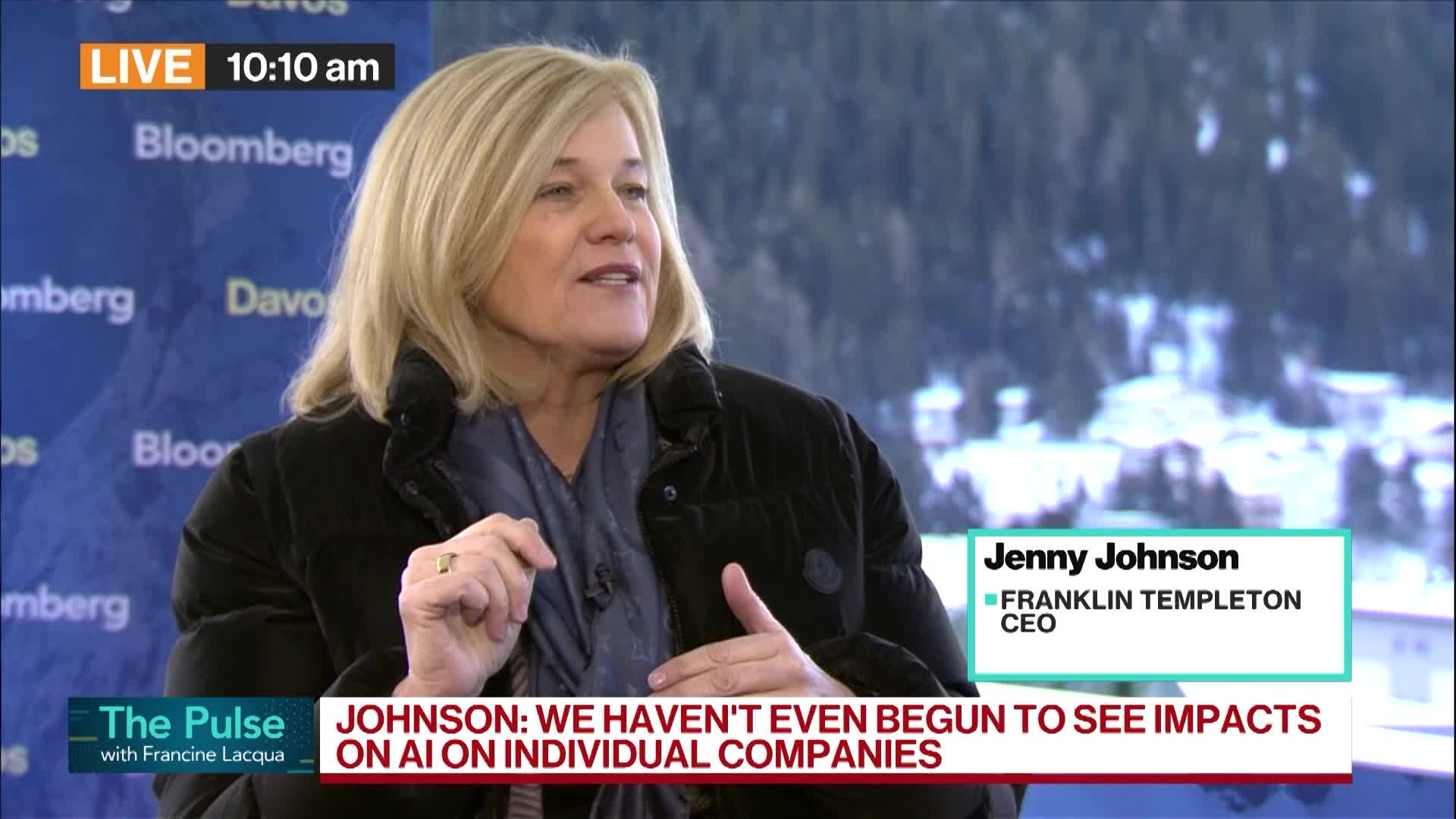
It was telling for me when we looked back at the interview we had last year, which was two days after President Trump was inaugurated, and how much was expected for him to do in terms of investments in markets away from geopolitics. Where are we? So actually, you know, I think that what he had said at the time was he's going to reduce regulation and provide more clarity. So both in private markets, I think that's been a positive thing as well as things like tokenization and, you know, both of those things. He kind of stated from the beginning actually, you see sort of his game plan. A lot of the things even today, the noises made, he kind of stated that from the beginning. So, you know, in the case of private markets, like we've been big believers that you need to have fair access to private markets. And I would say, you know, it's akin to when my grandfather set up Franklin Templeton, the average investor couldn't get access to the equity markets. Today, the average investor doesn't really have access to private markets and the size of private markets today because companies are waiting longer to go public. Banks aren't lending in the way they used to lend that folks have been left out of that. And so I think with some regulatory clarity and a real desire to provide fairer access, the administration has done a decent job with that. I mean, we're also hearing from the administration things about, you know, capping interest rates. And this goes back to the affordability issue in the U.S. How does that impact your world? But in general investment, look, I'm not a big fan of capping. I used to run a credit card department way back when. And, you know, it's pretty simple. There's three things that go into your cost of funds, the cost of operating it and your loss profile. If you cap rates, it means that you cannot lend to as many people. So I don't think that's a great move. I think there's probably, you know, it's great rhetoric to say, oh, gosh, I want to reduce my cost there. But I, I think that's a that's a tough one. When you look at private markets, you've expanded really rapidly in private markets, but we've also seen outflows. So how much can you grow that to also bring inflows back? We've actually had our best year. We raised 23 billion of private markets last year and over 20% of that came from the wealth channel. And it's about bringing these types of products. You have to really structure the product to understand the individual's risk and liquidity profile. And so if you you know, we've really focused on being able to do that, and sometimes that's a combination of public and private together in one product. Sometimes it's a perpetual type of product where you can get, you know, 5% liquidity. So it's actually so far been been a good year and we're looking to this year to even be better. What are you expecting this year? How much will you grow in that space? So Well, we had laid out a plan that said we'll raise 100 billion over five years. We raised 23 billion this year and we didn't have a big flagship product in the market. So this year we will with our Lexington Fund 11. And so we think it's going to be bigger. I think we've targeted, say, 25 billion this year. We love secondaries. We love secondaries because there's been so much private equity that has been deployed and now they're not. The liquidity of those have not come out as fast as about half of what historically it's been. And so people are looking for a liquidity mechanism. Secondaries is a great way to do that. We love them structurally. They don't have the same. you get a diversified portfolio, you get your cash flows earlier than traditional private equity. We also love real estate debt. So, you know, in private credit, a lot of people make tons of noise about private credit. I'm always surprised you would never look at your fixed income portfolio is one big portfolio you'd say is high yield attractive? Is middle market attractive? Is asset backed attractive? You need to think about your private credit portfolio that way as well. And so if you look in areas, we think real estate debt because regional banks aren't lending the way they used to lend is a great opportunity. We think asset backed is looking very, you know, is is looking like a good place to be attractive. And so I think it's really important to understand you got to underwrite it like you would underwrite a fixed income portfolio. And manager selection in private markets is really important. The diversity of the top quartile performing and bottom quartile is significant. So you really have to pick the right managers. How much volatility and general are you expecting? And actually does that again because of valuations? I know there's a large presence of US tech, because of geopolitics, because of these tariffs affecting a lot of volatility. I mean, it is right. I mean, it's opportunity or it's always opportune volatility opportunity for active managers. Right. And so, you know, look, this administration has shown us that there are surprises around the corner. And so you have to position your portfolio. You know, Franklin Templeton, we have clients in 160 countries. We're going to celebrate 80 years next year. We've been through a lot of administrations. Our job is to make sure our clients have their investment portfolio that is really diversified so that they can actually take these kind of short term shocks. And if you do it right, you can get through it. And I think, you know, in the case of President Trump, look, think about what the markets did after Liberation Day. You know, we were all like, oh, my gosh. And you know what? We came out pretty okay on the tariffs. China was going to be 100% right. The markets reacted to that little less. You got through that. I think we'll get through the. This latest is just because because the U.S. economy is resilient. I mean, the world economy is resilient or. Well, it's both that. And believe me, I think AI we haven't even begun to see the impact of AI on individual companies. I think the next really exciting thing is the companies within sectors that actually get it right. They will take they will take off leaving the others behind in that sector. And so right now it's been the picks and shovels that have really been the ones that have gotten the evaluation advantages. It's going to be those companies. It takes time for them to figure it out. So that, of course, is is part of the volatility. I think the other thing is this trend. Is it productivity that they work on or just in general like spending, you know, to upgrade their systems? It's going to be hugely transformative in the productivity. And by the way, you actually have seen in the US companies for decade, productivity was running at about 1%. We're now closer to 2%. It's massive, which is why I also think you've seen not so many jobs created and yet companies growing because we're we're getting there 157 million people working in the United States. We've had a 1% productivity. That's 1.5 less people that you need for the same kind of growth. And so definitely productivity. And I don't think that's in the numbers yet. I think that the productivity gains are from the technologies that have been kind of the last decade cloud servicing, other thing, digitalisation. So the AI it's going to take time and there's going to be winners and losers in it. But the pace of it is so dramatic faster than even I thought it would be. I mean, is the next 12 months, 12 to 24 months actually crucial for that? Because that could also mean job losses implications on the macro level. So I'm always one to say, like every time there's a big new technology, we predict that there's not going to be any jobs for. And somehow, you know, like nobody would have thought, Google would have 300,000 people and there'd be all these new things that we have. So I'm always optimistic that way. Having said that, I think that there when you say in the next 12 months, companies are going to invest in it to try to figure it out, there's going to be a lot of failures and dead ends in that process, but there's going to be learnings in that. And so I think that you will it's going to take a while for company. And one of the reasons I ran the IT department for a long time, one of the hardest things about I.T., you know, any kind of new application I think, is people resist change. So you change management staff. It's going to be hard to bring it into organizations, but the ones who get it right, it's going to be dramatic. There's a big presence of crypto here. The chief executives, if you walk around Promenade, a lot of the houses are actually country houses. Qatar has a big presence, some of the other countries. But then you also have a lot of the crypto exchanges. How do you see crypto getting more into the mainstream and what's it mean for? So I think 2026 is going to be a huge year where trad fi and Defi start to come together and I'll tell you why. So Franklin Templeton launched a on chain money market fund. It was approved by the SEC in 2020. It's natively on chain, which means we actually pay you your interest posted in your account every day. We can do that because it's on the blockchain. You can actually transfer. You will within the next few weeks be able to transfer on a Saturday from your money market fund into a stablecoin You can only do that because we are natively on chain, right? We were. The SEC had us run it parallel between our old system, our new system. We were astonished by how much, how cost effective it was. And why do I think it's 2026? Because one I just attended a crypto conference last week is that you suddenly have the traditional financial people who are showing up to these things and you have your crypto exchanges and others trying to launch traditional products and you have your traditional financial firms saying, I need to figure out how my clients are asking me how to provide advice on this, how do they invest in this area? And so I think you're going to have these things start to come together more. But this is because of support and blessing from the Trump administration. Is that a catalyst or is it just the way that business So it has helped in the US, but there are other Singapore, Hong Kong, the UAE, they've actually been, you know, much more advanced on kind of a regulatory environment which was leaving the US is because this is a technology that does really important things. Number one, it has a source of truth. There's a huge cost in financial services reconciling data within firms. And then once you have to reconcile with your counterparty, that's expensive. Number two, it has the ability to have a smart contract. If you own the token, whatever that agreement is, is actually programmed in it. So it's much more efficient. And then finally, it is a payment mechanism. We're going to see innovation on the in types of investment products. We're going to see more financial inclusion because it will be less costly to be able to deliver financial. But what about Bitcoin? So Bitcoin is a different deal, Different, but does it translate into also bigger demand or more acceptance of Bitcoin? So here's what I think about Bitcoin. I think that just like we're seeing gold take off, if you actually look at why gold has rallied over the last year, a lot of that is because central banks are trying are starting to buy gold. Why they want diversification from the dollar. You know, I talked to folks after the US froze assets from Russia. Not only did we. Freeze the central banks assets. But we froze oligarchs assets. And so there were people who said, wow, if we end up on the wrong side of that, that can be kind of scary. And so you see central banks diversifying. Well, the other option is you can diversify with Bitcoin and you see the big countries where you had heavy inflation. Turkey, El Salvador, Venezuela, they were all actually big in Bitcoin. And so it's it's a way for people to get a certain amount of diversification. I always argue it's a little bit like religion, your believer or not, but those who believe. View it as kind of a gold alternative.